Manual outreach did not scale cleanly
Teams needed a way to send personal-feeling letters without rebuilding each message by hand or losing track of recipient-specific details.
Portfolio Case Study
This case study presents a mock version of the card and letter creation flow. It focuses on the customer-facing interaction model: choose a card, customize a message, enter recipient information, and review a generated letter.
The emphasis is on the work behind the interface: reducing manual campaign setup, making merge fields less mysterious, and giving users a clear review moment before anything is considered ready to send.
Interactive Tour
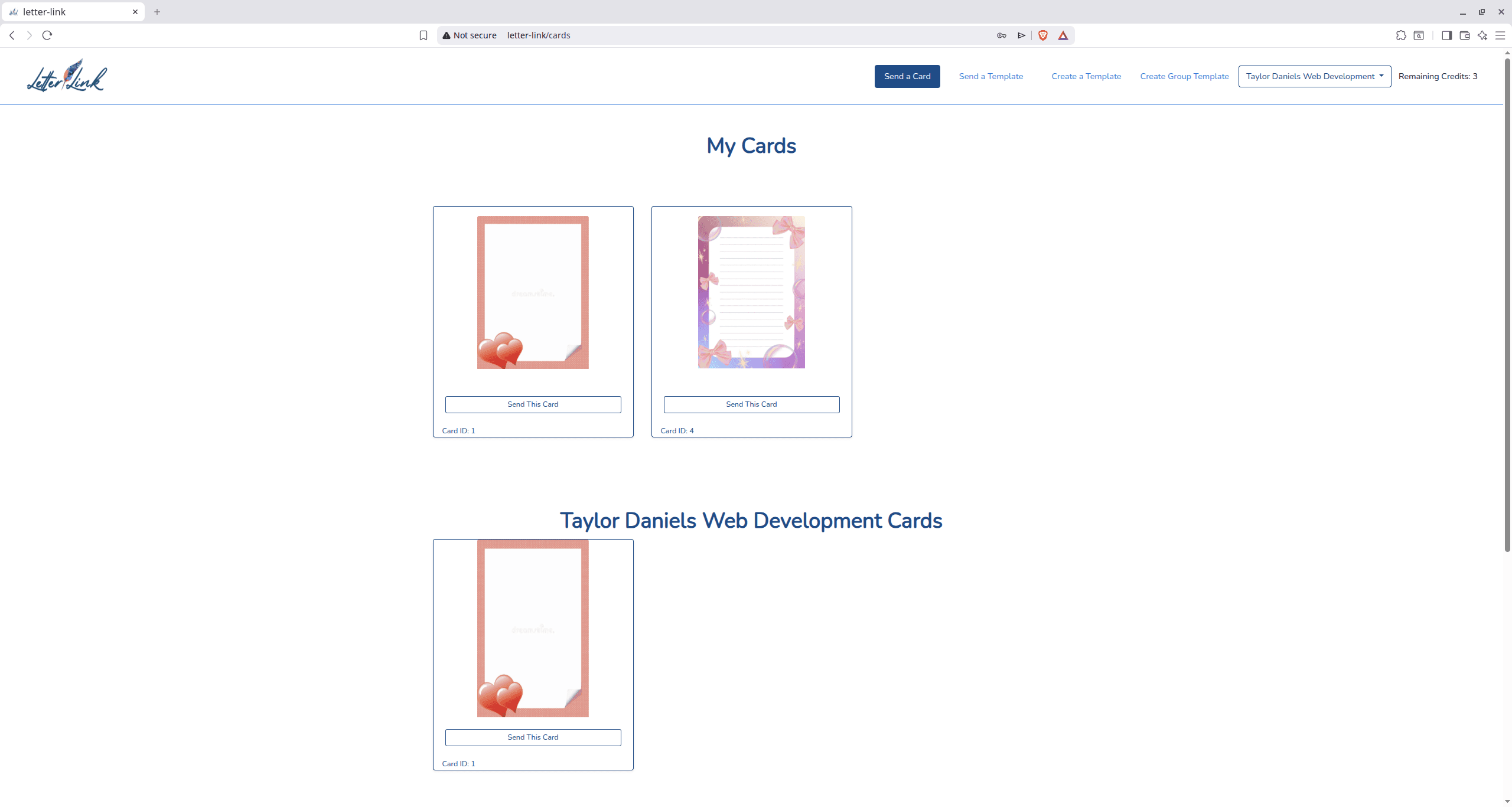
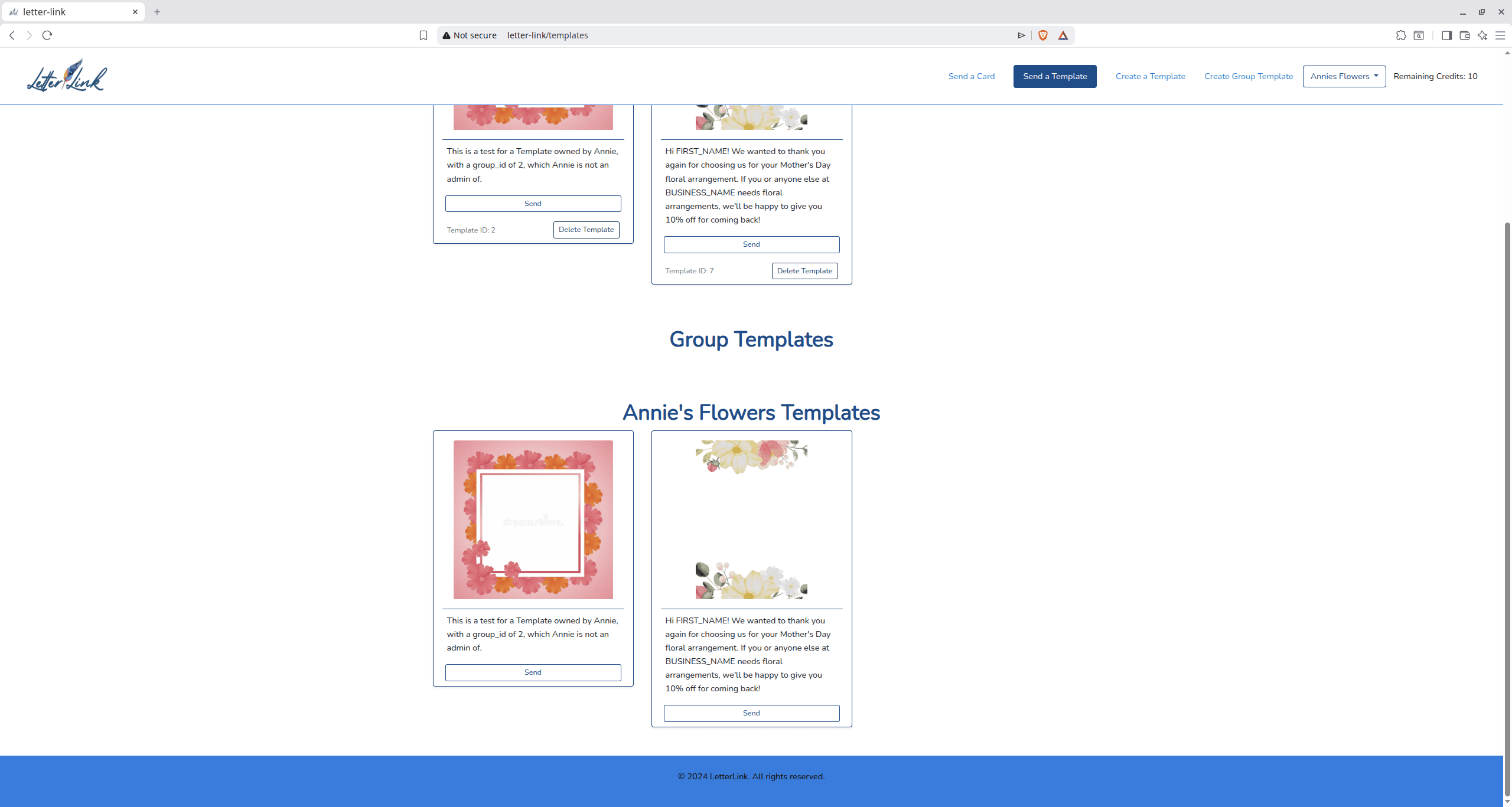
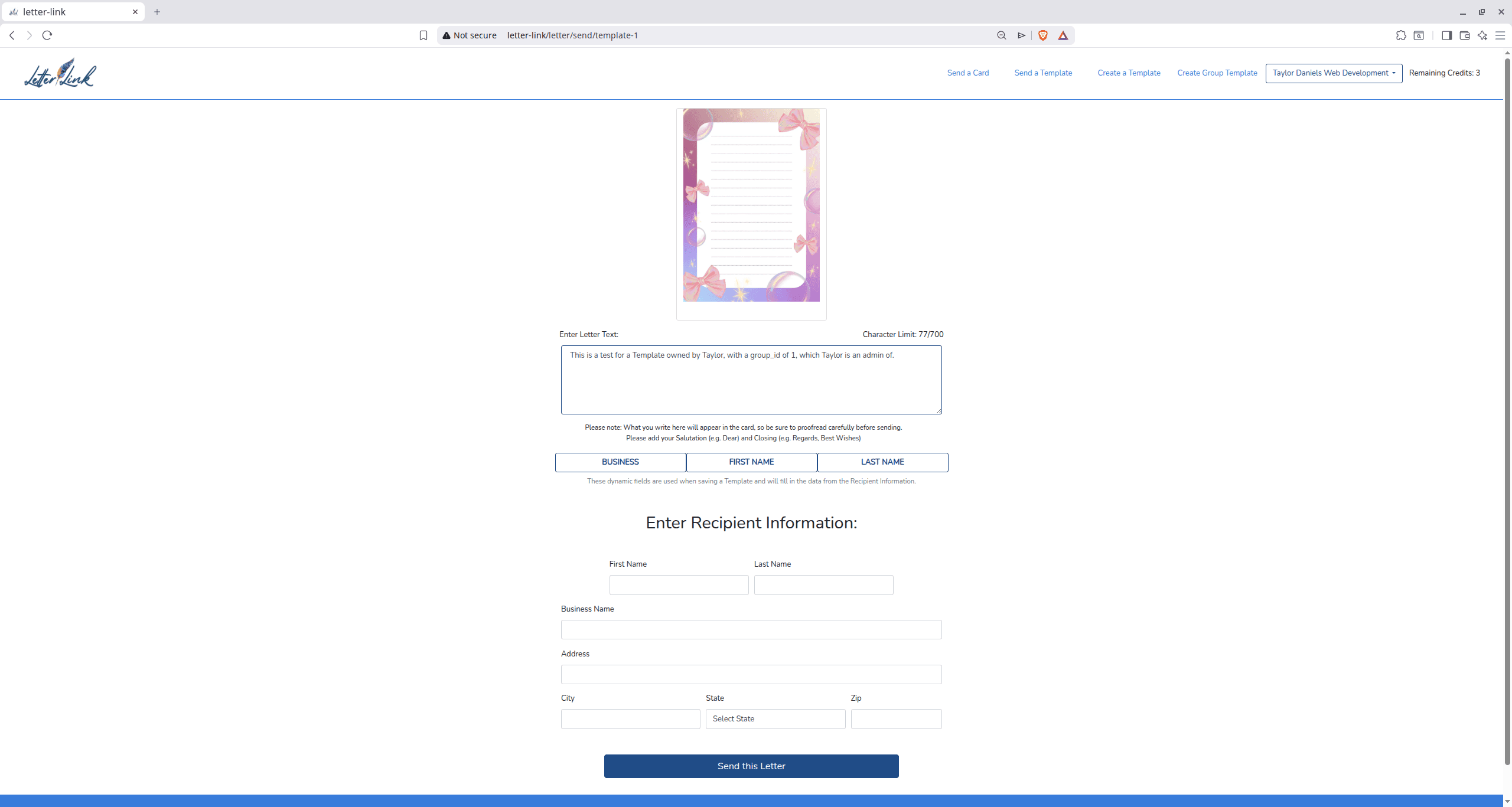
Explore the actual LetterLink interface. Select a step below to walk through the core campaign management experience.
Role
Product implementation, UX recreation, frontend architecture
Stack
Laravel 11, Blade, PHP, Next.js, React, Tailwind CSS
Scope
Public demo uses mock data only; production details are private
Context
Production screenshots and client data are not appropriate for a public portfolio, so this demo recreates the core workflow with representative UI, generic card templates, and sample recipient details.
The goal is to show how the product works without exposing private records, customer names, campaign content, or backend systems.
Problem
Teams needed a way to send personal-feeling letters without rebuilding each message by hand or losing track of recipient-specific details.
The workflow had to make templates, merge fields, recipient data, and preview output understandable before a campaign moved forward.
The public portfolio version avoids client names, campaign content, production screenshots, auth flows, and backend records while still showing the interaction model.
Users
LetterLink is strongest when it makes a repetitive communication task feel deliberate. The interface has to help users move quickly while still catching the details that make a letter feel personal.
Campaign operator
Build repeatable outreach without rewriting every letter from scratch.
Account team
Keep each message personal enough to feel intentional and relevant.
Reviewer
Confirm recipient details, merge fields, and send context before a batch moves forward.
Interactive Workflow
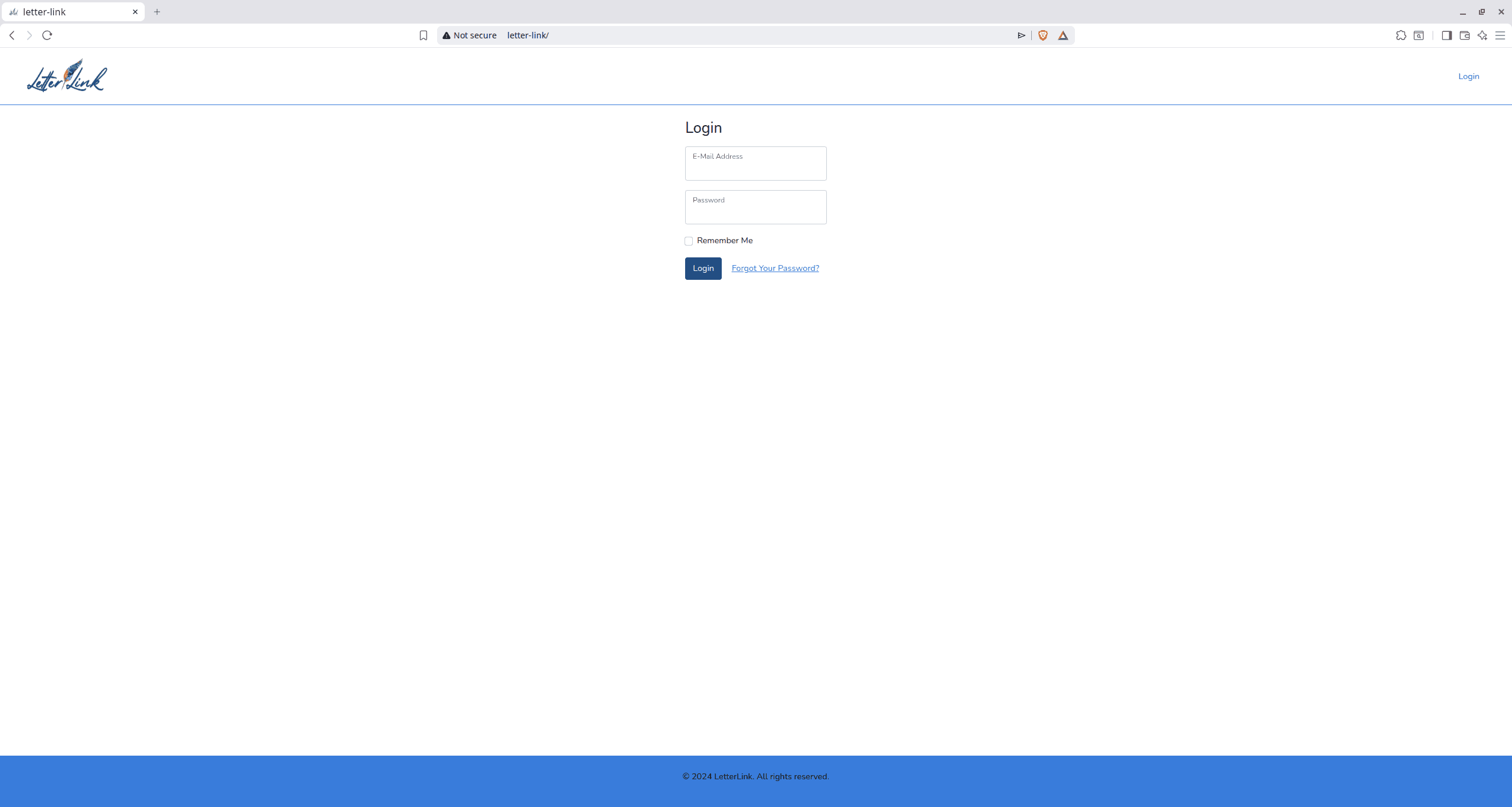
Browse representative cards and saved templates in a portal-style grid.
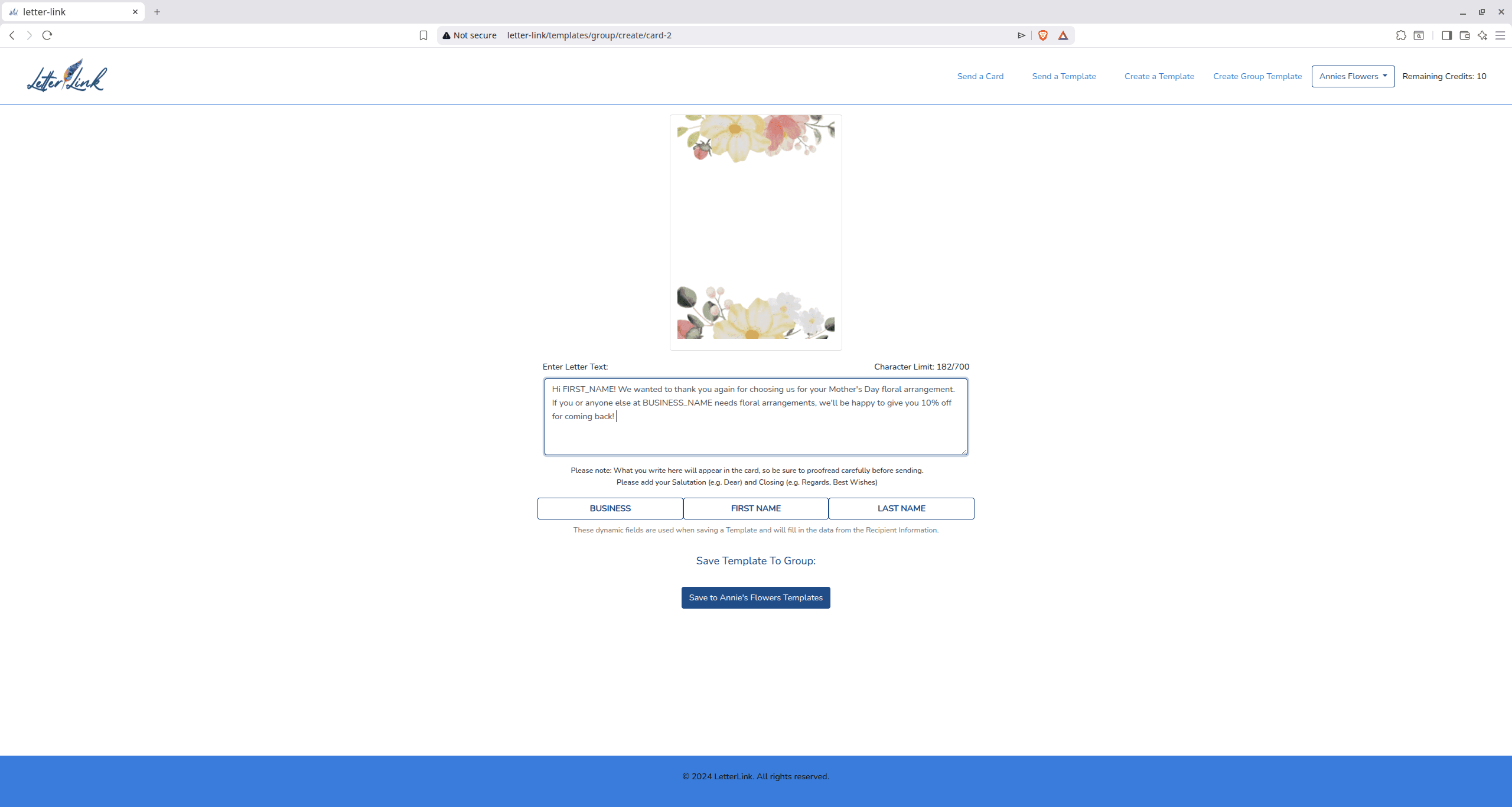
Edit the message, insert merge variables, and enter sample recipient details.
Review the generated letter after the sample recipient fields are resolved.
Implementation
The production app and public demo have different responsibilities. The demo is intentionally narrow: it explains the experience without pretending to expose the underlying business systems.
Demo Boundary
Preserved
The public demo keeps the workflow shape: card selection, template editing, merge variables, recipient fields, campaign settings, and preview review.
Changed
Names, business records, campaign content, sender identity, counts, and visual card details are representative mock data.
Omitted
Authentication, production database records, mailing vendor integrations, admin-only screens, and client-specific reporting stay private.
Outcomes
For users
A guided path from card selection to recipient review that reduces uncertainty before a letter campaign is queued.
For the business
A reusable workflow for personalized outreach that can support repeated campaigns without exposing private operational details.
For the portfolio
A concrete, privacy-safe demo that shows Taylor's ability to translate a real product into a clear public artifact.
LetterLink reinforced the value of building software around the moment when a user feels uncertain. The best interface was not the one with the most controls; it was the one that made a complex campaign feel reviewable, editable, and safe to use.
Demo recreation using mock data. No client information or production systems are connected.